4. Cooling Soup Before Storing in Glass Containers
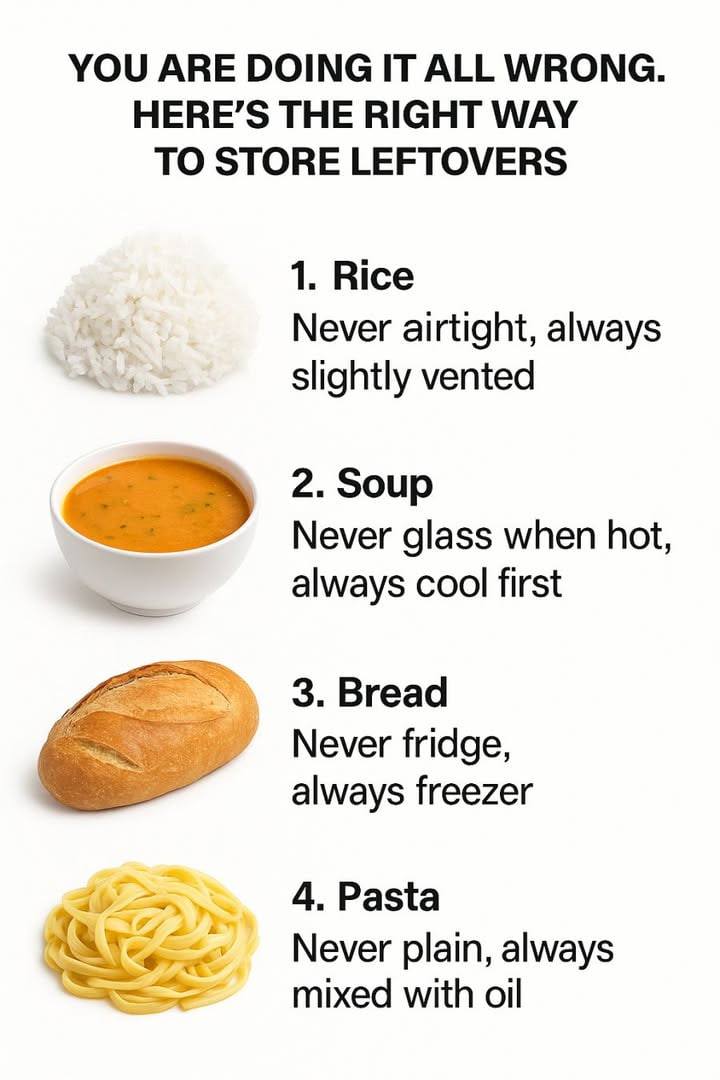
Hot liquids can cause glass containers to crack due to thermal shock. Allow soup to cool slightly before transferring it to glass containers.
To speed up cooling, divide soup into smaller portions in shallow containers. Increased surface area allows it to cool faster and more evenly. Once cooled, cover and refrigerate. When reheating, ensure the soup reaches 165°F for safety.
5. The Best Way to Store Bread: Freezer vs. Fridge
Although refrigeration may seem like a good option, it actually causes bread to stale faster due to starch retrogradation (recrystallization).
For long-term storage, the freezer is the better choice. Wrap bread tightly in plastic wrap or aluminum foil, then place it in a freezer bag to prevent freezer burn. Thaw at room temperature or toast directly from frozen for best results.
6. Storing Pasta to Prevent Stickiness
Plain pasta tends to stick together when stored. Toss cooked pasta with a small amount of olive oil before refrigerating to create a light barrier between strands.
Store in an airtight container and consume within three to five days. When reheating, add a splash of water to restore moisture and prevent drying.
7. Maximizing Freshness with Proper Labeling
Labeling leftovers may seem unnecessary, but it greatly enhances food safety and reduces waste. Include the storage date and a brief description of the contents.
This helps ensure you consume food while it’s still fresh. Use waterproof labels or markers that won’t smudge in the refrigerator or freezer.
8. Using the Right Temperature Settings
Your refrigerator and freezer settings play a vital role in food preservation. Keep your refrigerator at 40°F or slightly lower, and your freezer at 0°F.
Check temperatures regularly with an appliance thermometer, as built-in thermostats may be inaccurate. Avoid overcrowding to maintain proper airflow and consistent cooling.
9. The Role of Portioning in Effective Storage
Dividing leftovers into meal-sized portions before storing saves time and reduces waste. It makes reheating more convenient and prevents repeatedly warming large quantities of food, which can degrade quality.
Portioning also improves organization and makes it easier to find what you need.
10. Reheating Leftovers Safely and Efficiently
Reheat leftovers to at least 165°F and use a food thermometer to verify the temperature.
When using a microwave, cover food with a microwave-safe lid or vented wrap to retain moisture. Stir or rotate midway through heating for even warming. For foods like pizza or fried items, use an oven or toaster oven to maintain texture.
11. Useful Storage Hacks
Creative storage hacks can make leftover management easier. For example, freeze small portions of sauces or herbs in oil using an ice cube tray so you can use only what you need.
Storing leafy greens with a paper towel inside the container helps absorb excess moisture and keeps them crisp longer.