2. Ultra-Processed Food Concerns
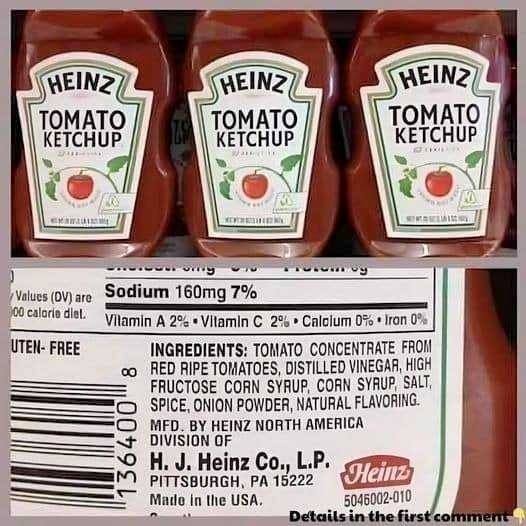
Ketchup, particularly mass-produced varieties, falls into the category of ultra-processed foods. That doesn’t automatically make it toxic—but it does raise questions.
Ultra-processing often means:
- Heavy refinement
- Industrial-scale manufacturing
- Stabilizers and flavor adjustments
- Standardized sweetness profiles
Mass production prioritizes shelf life and consistency over nutritional density.
Some consumers are increasingly skeptical of industrial food systems—and Heinz sits at the very center of that system.
3. The Corporate Factor
Heinz is not a small family-owned tomato farm bottling sauce in a rustic kitchen. It is part of a global conglomerate: Kraft Heinz.
Large food corporations operate on profit margins, shareholder returns, and cost efficiency. That’s not inherently evil—but it can influence decisions about:
- Ingredient sourcing
- Farming practices
- Supply chain ethics
- Environmental impact
Some critics argue that massive food companies often prioritize consistency and cost over transparency and sustainability.
Consumers who prefer to support smaller, local brands may see Heinz as a symbol of industrial food dominance.
4. The Taste Debate
Taste is subjective. But many people who branch out beyond mainstream ketchup brands discover something surprising:
Heinz ketchup is very sweet.
Its sweetness is deliberate—it’s engineered to create a strong flavor impression that pairs well with salty, fried foods. But once your palate adjusts to less sugar, Heinz can start to taste overpowering.
Some alternative brands offer:
- More tomato-forward flavor
- Lower sugar content
- Tangier vinegar profiles
- Spicier variations
When you taste ketchup with less sweetness, you might realize that the tomato itself has been overshadowed all along.
5. Marketing vs. Reality
Heinz has built a powerful brand identity. The iconic glass bottle. The slow-pour mystique. The famous “57 varieties” slogan.
Marketing shapes perception.
But brand recognition doesn’t equal superior quality.
The power of long-standing brand dominance can discourage experimentation. Many consumers simply buy Heinz out of habit—not because they’ve compared options.
Breaking out of brand loyalty can be eye-opening.
6. Agricultural and Environmental Concerns
Tomatoes used in mass-market ketchup often come from large-scale industrial farming operations.
Potential concerns include:
- Monocropping practices
- Heavy pesticide use
- Soil depletion
- Water-intensive cultivation
Industrial tomato farming has been scrutinized in various countries for environmental strain.
While Heinz does publish sustainability reports, critics argue that large-scale food production inevitably carries a heavy ecological footprint.
Choosing smaller, organic, or locally produced ketchup brands may align better with environmentally conscious values.
7. The Psychological Habit
Ketchup is comfort. It’s childhood. It’s backyard barbecues.
But comfort foods can become automatic habits.
Ask yourself:
- Do you actually taste the ketchup?
- Or is it just a reflex squeeze?
- Does it enhance your food—or mask it?
Many chefs argue that drowning food in ketchup often hides poor cooking quality.
If fries need heavy ketchup, maybe they lack seasoning.
If a burger needs to be coated in sweetness, maybe it’s dry or under-seasoned.
Sometimes avoiding ketchup improves your cooking skills.
8. The Health-Conscious Shift
In recent years, many consumers have moved toward:
- Whole foods
- Reduced added sugar
- Fewer processed condiments
- Clean-label products
Heinz has responded by releasing lower-sugar and organic variants. But critics argue these adjustments follow trends rather than lead them.
For those committed to minimizing processed foods, even “organic ketchup” may still fall short of ideal standards.