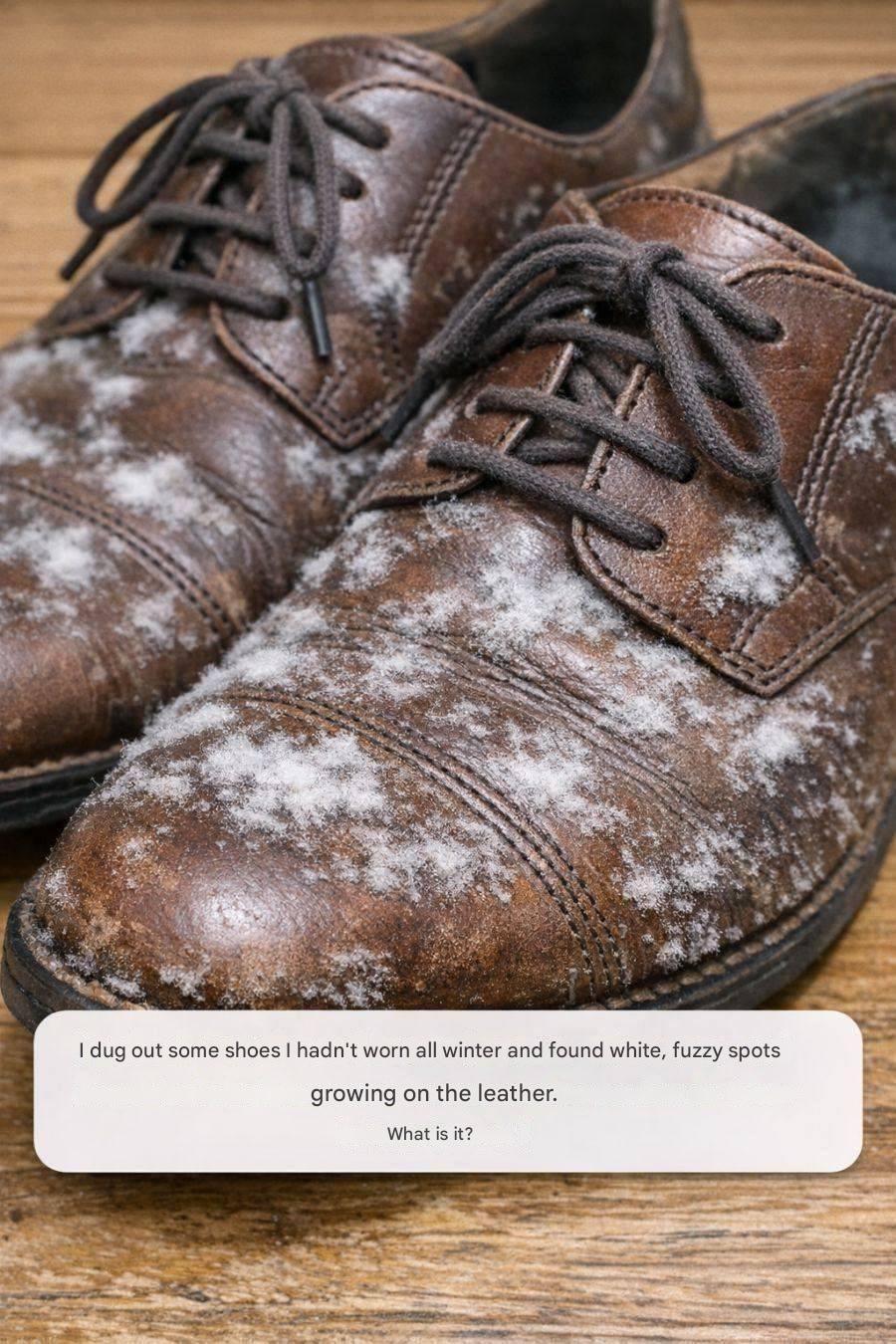
Leather, being a natural material, is prone to absorbing moisture. When shoes are stored in a humid environment without adequate ventilation, conditions become ideal for mold growth. It’s important to note that mold can penetrate the microscopic pores of leather, which is why it’s crucial to address the problem quickly and thoroughly.
2. Why Mold Loves Your Worn-Out Winter Shoes: In
winter, shoes are often stored in closets or basements, where humidity can easily exceed 60%, the threshold at which mold begins to thrive. Leather is a porous material, meaning it can absorb moisture from the air. When the ambient temperature fluctuates, condensation can form on the leather’s surface, providing the moisture mold needs.
Additionally, organic residues like sweat, skin cells, and dirt left on shoes after the last use can serve as a nutrient-rich substrate for mold. Without regular cleaning and maintenance, these residues can worsen mold growth, especially during long periods of storage.
3. How to Tell if It’s Mold, Mildew, or Just
Salt Stains Distinguishing between mold, mildew, and salt stains is crucial for determining the correct cleaning method. Mold typically appears fuzzy and can be white, green, or black, while mildew can look more powdery and is often white or gray. Salt stains, on the other hand, appear as chalky white streaks or patches and are more common in areas where road salt is used.
A simple test is to dampen a cloth with white vinegar and gently wipe the affected area. Mold and mildew will usually transfer onto the cloth, while salt stains will dissolve with the acidic solution, leaving a distinct mark on the cloth. This identification step is essential for choosing the right cleaning strategy.
4. When a “cold-season mold bloom” occurs: the role of
winter storage. How shoes are stored in winter plays a significant role in mold growth. Enclosed spaces with poor air circulation, such as boxes or plastic bags, trap moisture and create an ideal environment for mold. If shoes are stored in attics or basements, which frequently experience temperature fluctuations, the risk is even higher.
To prevent mold growth during the cold season, it’s essential to ensure shoes are completely dry before storage and kept in a well-ventilated, climate-controlled environment. Using desiccants like silica gel packets can help absorb excess moisture and prevent mold growth.
5. Are these fuzzy patches dangerous to your health?
I took out some shoes I hadn’t worn all winter and found white, fuzzy spots growing on the leather. What is it?