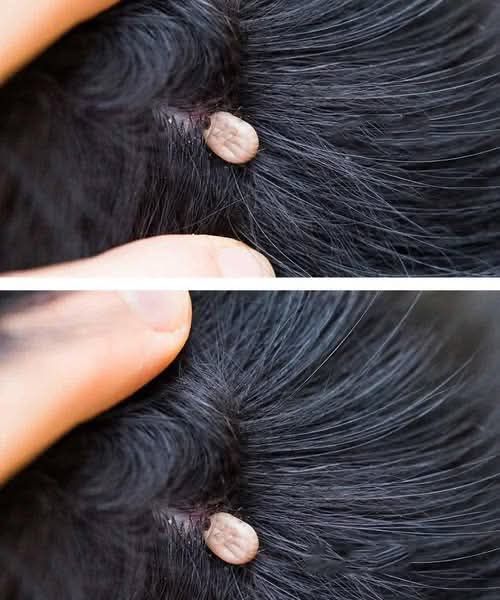
Is it moving? → Likely a live louse
Is it tiny, white, and firmly attached to the hair shaft? → Could be nits (lice eggs)
Is it flaky or scaly? → Might be dandruff or seborrheic dermatitis
Is there redness, sores, or intense itching? → Could indicate infestation or infection
📌 Note: Nits are often mistaken for dandruff — but unlike dandruff, nits stick tightly to the hair and don’t brush off easily.
- The Usual Suspects: Common Hair Pests in Kids
Children are especially vulnerable due to close contact at school, sleepovers, and playgrounds.
Head Lice (Pediculus humanus capitis)
Size: 2–3 mm, about the size of a sesame seed
Color: Tan to grayish-white
Behavior: Crawls (doesn’t jump or fly)
Eggs (nits): Tiny, oval, white or yellowish, glued within ¼ inch of the scalp
Symptoms: Itching, especially behind the ears and at the nape of the neck
✅ Good news: Lice don’t carry disease and aren’t a sign of poor hygiene.
Scabies Mites (Sarcoptes scabiei)
Size: Microscopic — you won’t see them without a microscope
Behavior: Burrow into the skin, not just the hair
Symptoms: Intense itching (worse at night), pimple-like rash, tiny burrow lines on skin
Common areas: Hands, wrists, elbows, armpits — but can spread to scalp, especially in young children or infants
⚠️ Red flag: If your child has a rash on the body and scalp irritation, scabies could be the cause.
- How to Check for Lice and Nits
Use a fine-toothed nit comb (available at pharmacies).
Section the hair and comb from root to tip over a white towel or paper.
Look for:
Live lice crawling
Nits that don’t brush off
Check near the scalp, behind the ears, and at the back of the neck — lice love warmth.
🔍 Pro tip: Wet the hair and apply conditioner — it slows lice down and makes them easier to spot. - Home Remedies: What Works (and What’s Just a Hack)
Many parents turn to viral “natural” solutions — but not all are effective.
✅ What Can Help:
Over-the-counter lice shampoos with permethrin or pyrethrin (e.g., Nix, Rid)
Wet combing every 2–3 days for 2 weeks
Sealing combs, brushes, and hair accessories in a plastic bag for 48 hours
Washing bedding, hats, and stuffed animals in hot water (130°F+) and drying on high heat
❌ Home Hacks with Limited Evidence:
Mayonnaise or olive oil – May suffocate lice temporarily, but doesn’t kill nits
Tea tree oil – Some antiseptic properties, but can irritate skin and isn’t a cure
Hair dryers or flat irons – Not safe or effective; can burn the scalp
🛑 Never use kerosene, gasoline, or essential oils in high concentrations — they’re dangerous.
- When to See a Doctor
While lice are usually manageable at home, certain signs mean it’s time to call your pediatrician or dermatologist: