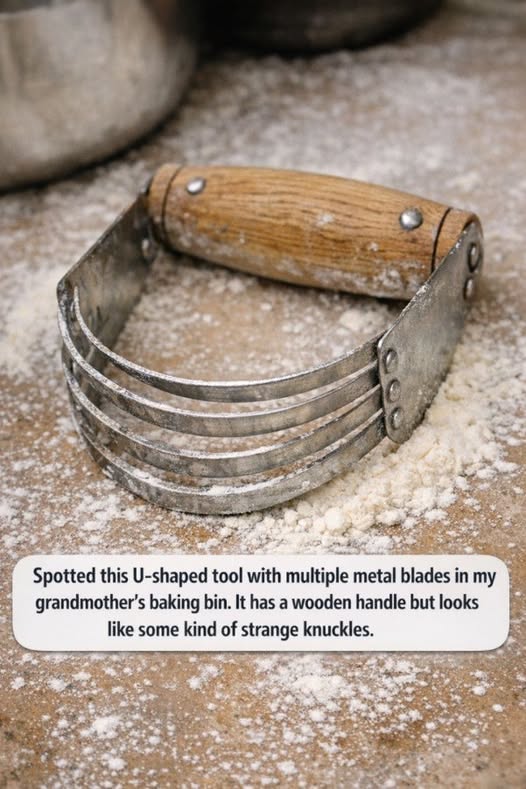
A pastry blender is a handheld kitchen tool designed to cut cold fat—usually butter, shortening, or lard—into flour. Its signature design includes:
A curved or U-shaped metal frame
Multiple parallel metal blades or wires
A wooden or metal handle
At first glance, it can look a little intimidating. The blades are close together and slightly flexible, which is why some people mistake it for a specialty masher or even a vintage canning device.
But its purpose is precise and elegant: creating flaky pastry.
Why Not Just Use a Fork?
That’s the natural question. After all, many recipes say you can use two knives or a fork to “cut in” butter. And yes, you can. But once you use a proper pastry blender, you understand why it exists.
The goal in many baked goods—like pie crusts, biscuits, and scones—is to leave small pieces of cold butter distributed throughout the flour. When the dough bakes, those tiny pockets of fat melt and release steam, creating delicate layers and flaky texture.
A fork tends to smear butter.
Your hands warm it too quickly.
Food processors can overwork the dough in seconds.
A pastry blender strikes the perfect balance:
It cuts butter into pea-sized pieces.
It distributes fat evenly.
It keeps your hands off the dough, preserving cold temperature.
It gives you control.
It’s a tool built for texture.
The Science of Flaky Dough
Let’s break down what’s happening when your grandmother used that tool.
Flour contains proteins that form gluten when mixed with liquid. Gluten provides structure—but too much gluten makes pastry tough.
Butter (or other fat) coats some of the flour particles. This coating limits gluten formation. When the butter melts in the oven, it leaves behind layers and pockets.
The pastry blender helps create:
Coarse crumbs for crumb topping
Pea-sized bits for pie crust
Finer crumbs for tart shells
That texture control is why experienced bakers swear by it.
A Tool with History