A mantis egg case (ootheca) typically:
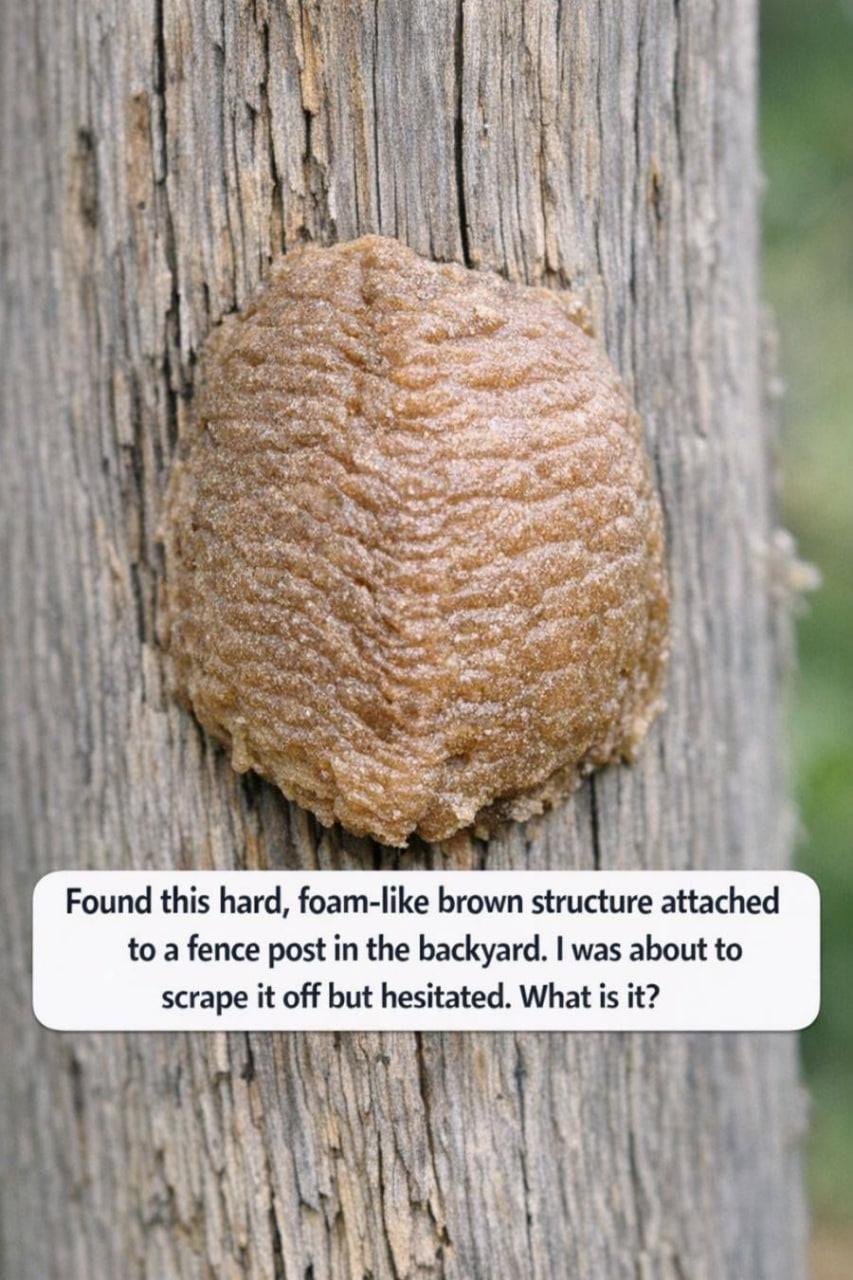
- Is tan to light brown
- Has a ridged, foamy or spongy texture
- Feels hard and firmly glued to the surface
- Measures about 1–2 inches long
- Is attached to twigs, branches, fence posts, walls, or garden structures
At first glance, people often mistake it for:
- A wasp nest
- Expanding insulation foam
- A fungus
- Some kind of pest growth
But it’s actually a protective nursery.
🦗 Meet the Creator: The Praying Mantis
The structure is made by a female praying mantis (order Mantodea). After mating in late summer or fall, she produces a frothy secretion that quickly hardens into a protective case around her eggs.
Praying mantises are:
- Beneficial garden predators
- Natural pest controllers
- Harmless to humans and pets
- Excellent hunters of flies, moths, crickets, and other insects
Many gardeners actually hope to find these egg cases because they indicate a healthy ecosystem.
🧱 What’s Inside?
Inside that single case can be:
- 100–300 tiny mantis eggs
Throughout fall and winter, the ootheca protects them from:
- Freezing temperatures
- Rain
- Predators
- Drying out
In spring, when temperatures warm up, dozens (sometimes hundreds) of tiny mantises hatch. They emerge looking like miniature adults and quickly disperse to hunt.