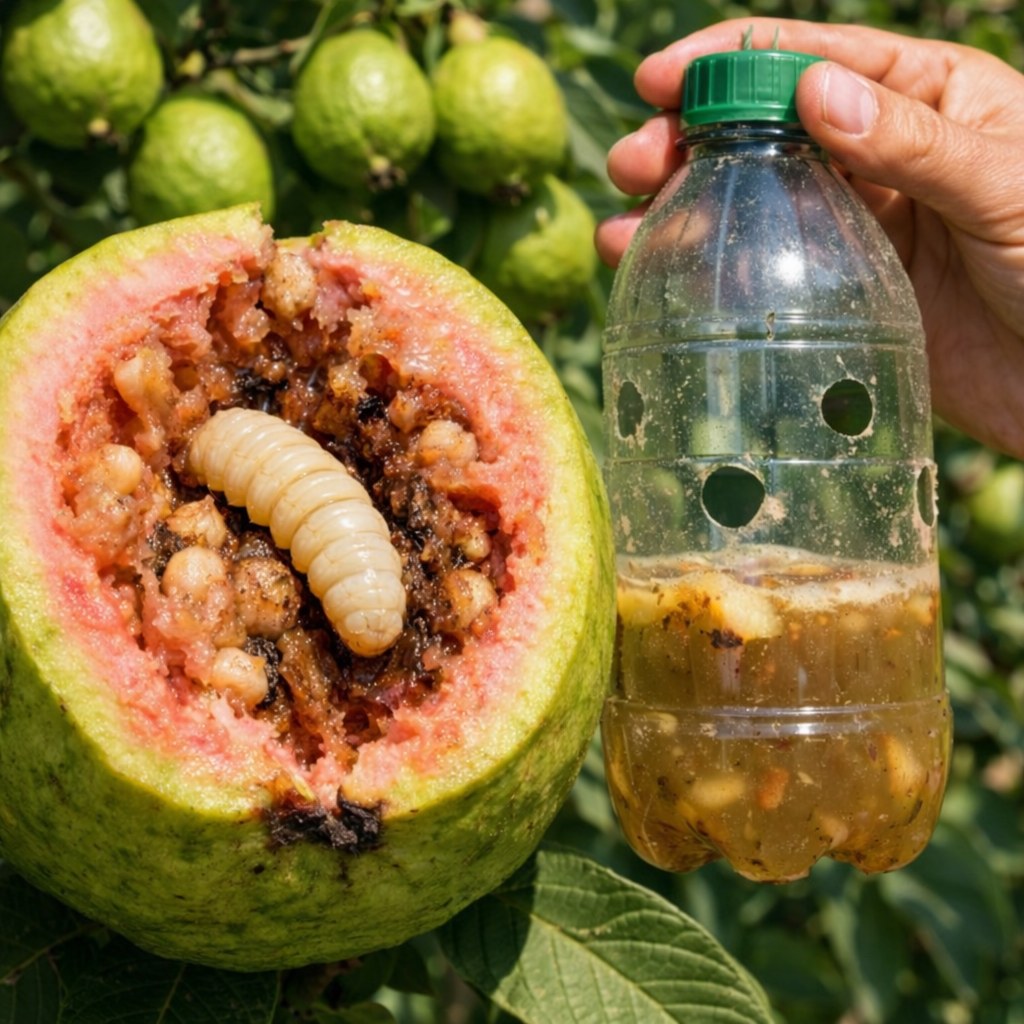
In a container:
- Mix 100 ml of water.
- Add 2 tablespoons of sugar.
- Incorporate the pulp of very ripe fruit.
- Lightly crush or blend to release aroma.
The natural fermentation of the fruit is what strongly attracts flies.
3. Place the mixture inside the bottle
Pour the mixture into the bottle and close with the cap.
The fly, attracted by the aroma, will enter through the holes, fall into the liquid and will not be able to get out.
This is how the reproductive cycle is interrupted.
How and when to set the trap
This point is key.
- Don’t wait until the fruit is ripe.
- Install the trap when the fruit is just beginning to form.
- Hang it on the tree, at the height where the fruit is.
- If possible, place it on the side where the sun rises (it improves efficiency).
- Use one or two traps per tree, depending on the size.
You’ll start seeing results in 2 or 3 days.
Change the liquid periodically until you notice no more flies falling in.
The more traps you place, the faster you will reduce the population.
After eliminating the pest: improve the quality of your fruit
Many growers manage to control the fruit fly, but then continue to harvest small or weak fruit. This happens because the plant needs proper nutrition.
Balanced fertilization can make all the difference.
Nutrition recommendation
You can use a balanced fertilizer such as:
- NPK 10-10-10 with micronutrients
Indicative dilution:
- 1 capful in 1 to 1.5 liters of chlorine-free water.
- Apply approximately 250 ml per plant.
- Repeat every 30 days.
Avoid applying in direct sunlight. If it is necessary to do so during the day, make sure the plant is in the shade.
Nitrogen provides vigor, phosphorus promotes flowering and fruiting, and potassium improves fruit size, flavor, and quality.
Tips and recommendations
- Remove fallen and damaged fruit from the ground to prevent the reproduction cycle from continuing.
- Keep the area clean and well-ventilated.
- Don’t leave ripe fruit unharvested.
- Check the traps regularly.
- If the attack is strong, the number of traps increases.
- Use very ripe fruit as bait: it is more attractive to flies.
Consistency is key. It’s not a miracle cure that happens overnight, but an effective method for gradually controlling the infestation.
The worm in guava doesn’t appear by accident, but rather as part of the fruit fly’s natural life cycle. Instead of resorting to insecticides, a simple, well-placed trap can nip the problem in the bud. With proper control, adequate nutrition, and consistent care, you can once again enjoy healthy, sweet, and excellent quality fruit at home.