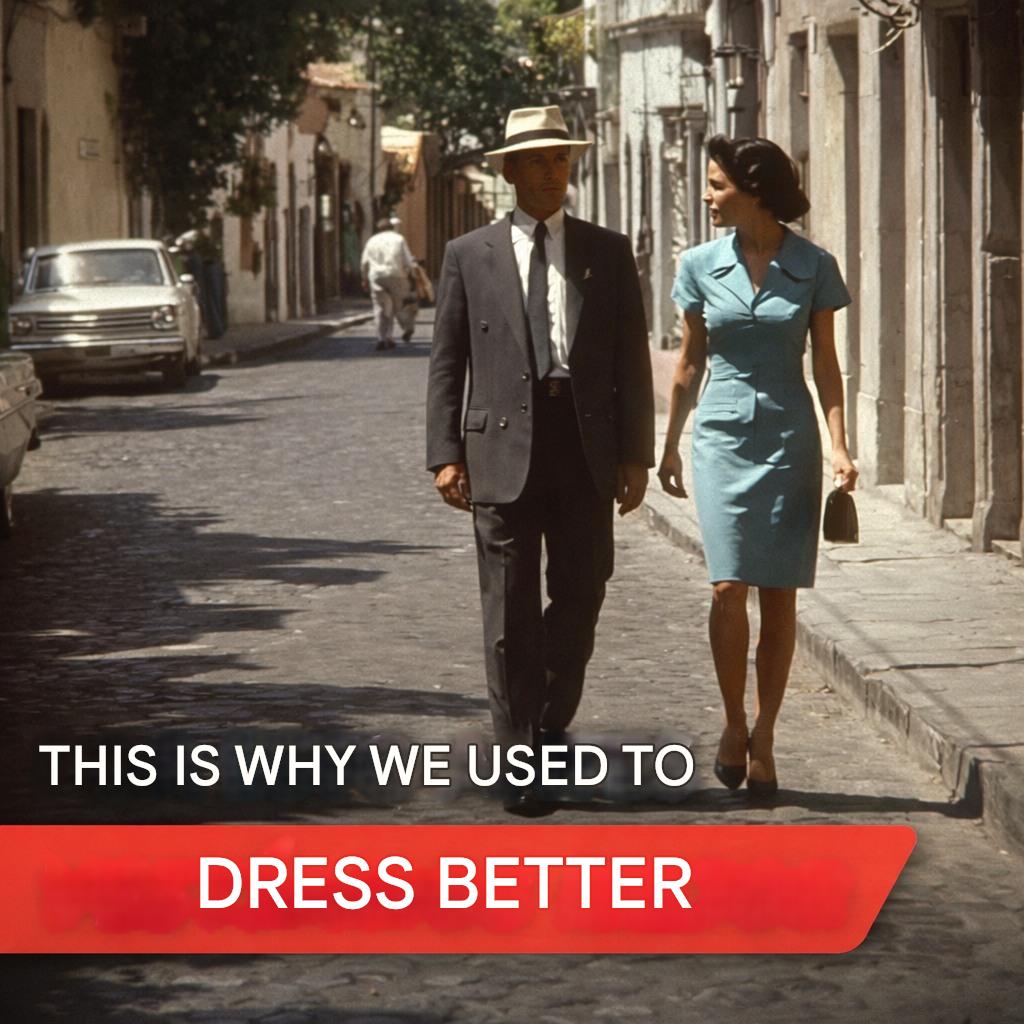
In the early 1960s, no respectable man went out without a hat. Fedora, homburg, or flat cap: covering your head was an absolute social norm.
But in 1961, John F. Kennedy appeared at his presidential inauguration without wearing a hat. His youthful and modern image, broadcast on television, changed public perception. Within a few years, the hat industry collapsed.
A centuries-old tradition disappeared almost overnight.
2. When trousers were a source of female scandal
At the beginning of the decade, many women were not allowed to wear pants in restaurants, offices, or schools. They could be expelled or even punished.
However, the massive influx of women into the workforce made the change inevitable. By the late 1960s, trousers were already a symbol of autonomy and practicality. Television helped normalize this when popular figures began wearing them on screen.
It was a radical transformation in less than ten years.
3. The miniskirt that scandalized the world
In 1964, designer Mary Quant launched the miniskirt in London. It rose several centimeters above the knee and provoked religious protests and moral debates in various countries.
What some considered indecency, others considered freedom.
The miniskirt symbolized the most visible generational clash of the era. But it also exposed many women to harassment and violence, demonstrating that aesthetic liberation was not always accompanied by social protection.
4. Long hair: rebellion that could cost you dearly
Today it seems trivial, but in the 60s, growing your hair long like a man was a direct provocation.
They could deny you access to public places, suspend you from school, or even physically assault you. Hair became a symbol of resistance against authority, especially in times of war and social unrest.
By 1969 it was commonplace. But the road was fraught with real confrontations.