🔍 How to Identify It
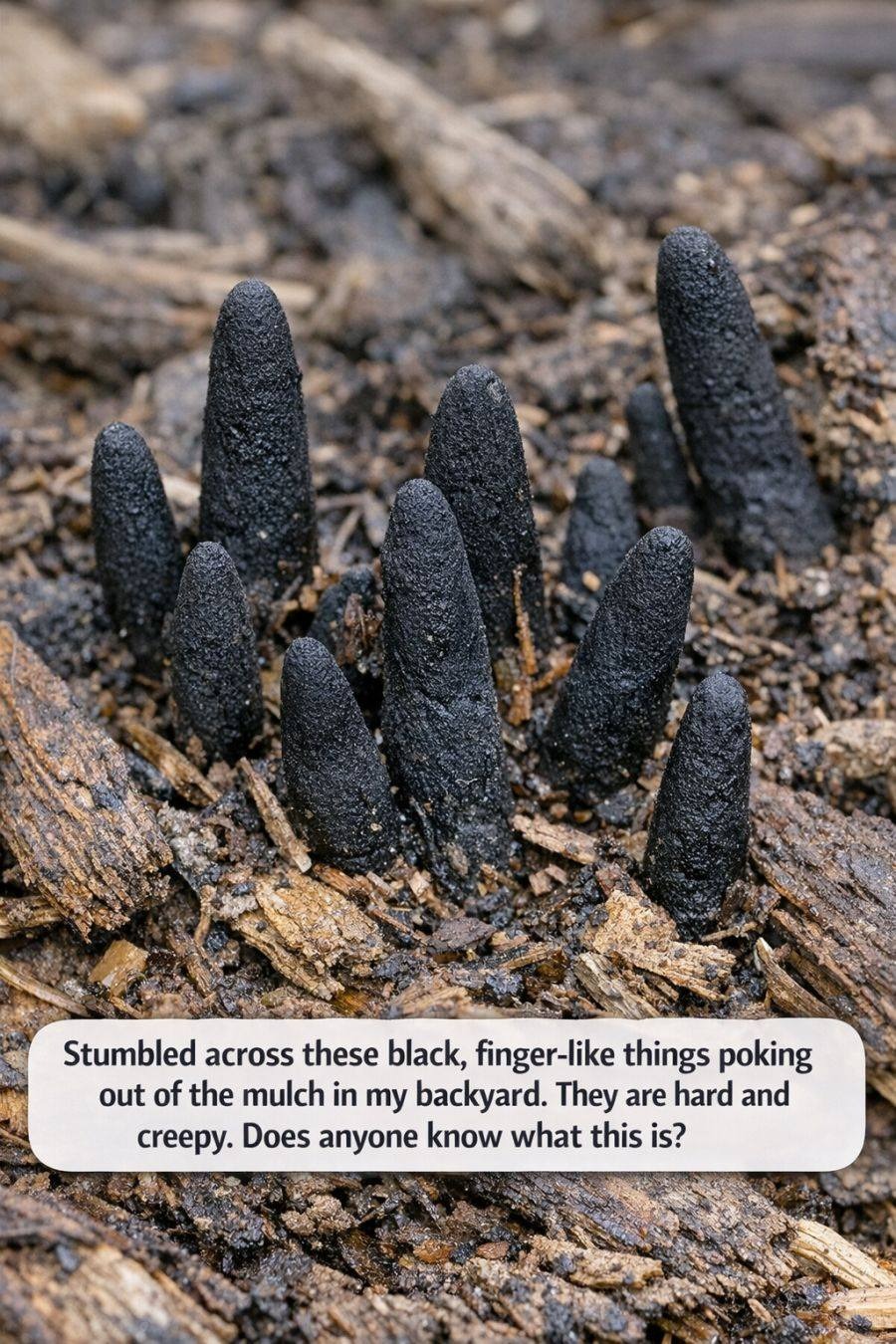
Look for these key traits:
Grows in clusters (like a hand with multiple fingers)
Black or dark brown exterior, but white inside if you break one open
Found directly on or near decaying wood (not on healthy plants)
No foul odor (unlike some harmful molds)
⚠️ Don’t confuse it with:
Dog vomit slime mold (yellow, slimy, amorphous)
Artillery fungus (tiny black specks that stick to siding)
Poisonous mushrooms (usually have caps, gills, or stems)
🌱 Why It’s Actually Beneficial
Improves soil health by decomposing wood into nutrient-rich humus
Helps recycle carbon back into the ecosystem
Indicates healthy microbial activity in your garden
💡 Think of it as nature’s compost crew—quietly working underground.