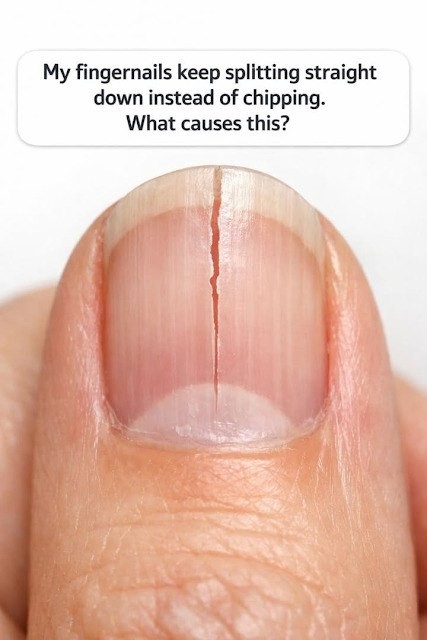
Before addressing vertical splitting, it helps to know the basics of nail structure:
- Nail plate – The visible hard part of the nail made of keratin.
- Nail bed – Skin beneath the nail that supports growth.
- Matrix – The root area under the cuticle where nails grow. Damage here can affect the nail permanently.
- Cuticle – Protects the nail matrix from infection.
Vertical splits often occur because of weakness in the nail plate or external trauma, rather than simple surface chipping.
Common Causes of Vertical Nail Splitting
1. Repeated Trauma or Physical Stress
- Biting, picking, or using nails as tools can weaken the keratin layers.
- Frequent exposure to wet/dry cycles, such as washing dishes without gloves, can dry nails and cause splitting.
2. Nutritional Deficiencies
Nail health depends on proper nutrients. Deficiencies can cause vertical splits, ridges, or brittleness:
- Biotin – Supports keratin production.
- Iron – Low iron (anemia) can weaken nails.
- Zinc, Vitamin C, and protein – Essential for nail strength.
3. Aging and Genetics
- Natural aging thins nails, making them prone to vertical splitting.
- Some people have hereditary brittle nails.
4. Skin and Nail Conditions
- Psoriasis – Can cause nail ridges, splitting, or pitting.
- Eczema or dermatitis – May weaken the nail bed and plate.
- Fungal infections – Rarely cause vertical splits but may worsen nail fragility.
5. Environmental Factors
- Frequent exposure to water, detergents, and harsh chemicals can dry nails.
- Cold, dry climates can make nails brittle.
6. Medical Conditions
Vertical splitting may indicate underlying systemic issues:
- Hypothyroidism
- Iron deficiency anemia
- Kidney disease (rare)
Note: Persistent, severe splitting should be evaluated by a healthcare professional to rule out medical causes.
Home Care and Preventive Measures
Even if you can’t see a doctor immediately, there are practical ways to protect and strengthen nails.
1. Moisturize Regularly
- Apply nail oil, cuticle oil, or petroleum jelly daily.
- Focus on the tips and cuticle area to prevent drying and splitting.
- Look for oils with vitamin E, jojoba, or almond oil.
Tip: Moisturizing after washing hands locks in hydration.
2. Gentle Nail Filing
- File nails in one direction, never back and forth.
- Avoid aggressive buffing, which thins the nail plate.
3. Avoid Prolonged Water Exposure
- Wear gloves when washing dishes or using cleaning products.
- Minimize soaking nails in water for long periods.
4. Limit Harsh Chemicals
- Avoid frequent use of acetone-based nail polish removers.
- Choose nail polishes free of formaldehyde, toluene, and DBP.
5. Protective Nail Practices
- Keep nails trimmed and rounded to reduce the risk of vertical splits catching on surfaces.
- Avoid using nails as tools to open packages or scrape surfaces.
6. Nutritional Support
- Include foods rich in biotin (eggs, nuts, seeds).
- Ensure iron-rich foods (spinach, lean red meat, lentils).
- Adequate protein intake is crucial for keratin synthesis.
- Consider a biotin supplement (consult a healthcare professional).
7. Avoid Frequent Manicures or Acrylic Nails
- Artificial nails and gel treatments can weaken natural nails.
- If using salon products, give nails breaks between applications.