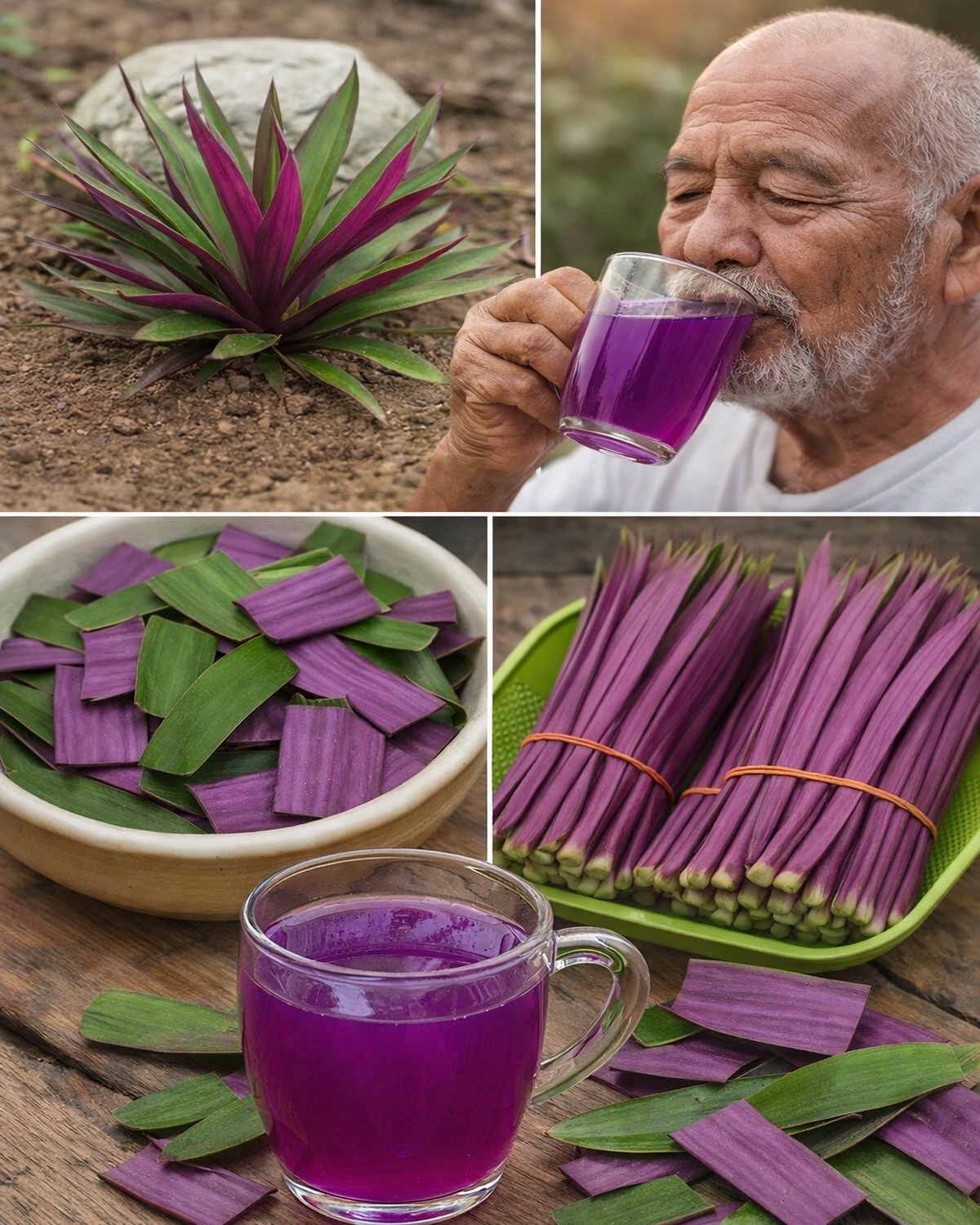
Also called: Purple Queen, Wandering Jew (though this term is increasingly avoided)
Appearance: Fleshy, lance-shaped leaves in rich violet-purple; pink flowers in summer
Common use: Ornamental ground cover or container plant (hardy in zones 9–11)
🌿 Traditional use: In parts of Central America, a mild tea made from fresh leaves has been used for minor respiratory irritation, digestive upset, and as a general anti-inflammatory tonic.
The Science Behind the Hype
Purple Heart’s vibrant color comes from anthocyanins—powerful antioxidants also found in blueberries, red cabbage, and black rice. These compounds are known to: