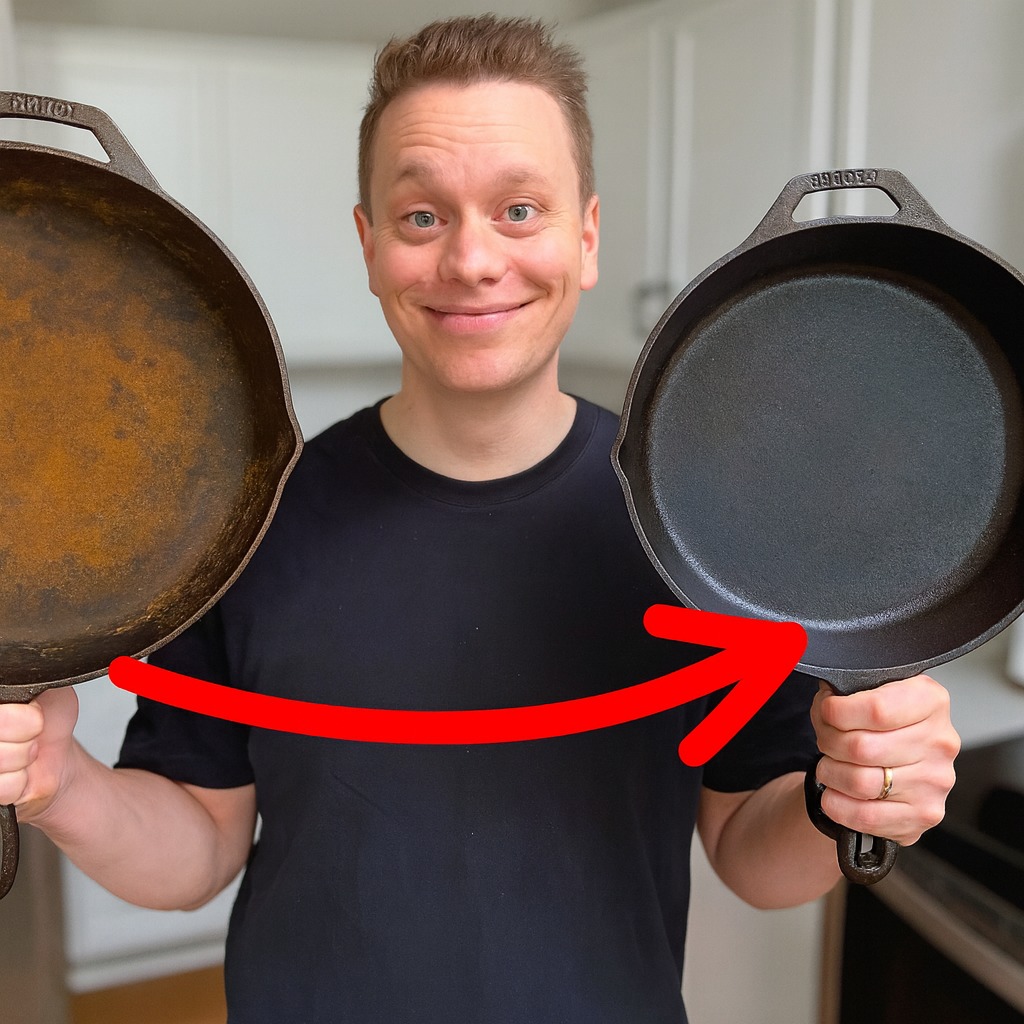
This is the key method:
- Cover the bottom of the pan with a generous layer of coarse salt .
- Cut a potato in half .
- Use potatoes as a natural exfoliant:
- Rub vigorously on the salt.
- It performs circular or frictional movements.
- The combination of the salt’s texture and the potato’s moisture helps to loosen crusts, old grease, stuck-on dirt, and burnt residue .
This step is very effective because it does not scratch the iron and allows for deep cleaning without harsh products.
Step 2: Wash and dry properly
Once you have removed all the dirt:
- Rinse the pan well under running water.
- Wash it with a sponge and a little detergent .
- Make sure to remove any remaining salt or potato.
- Dry it immediately with an absorbent cloth or napkin.
- To completely remove moisture, place the pan in the hot oven for a few minutes , or heat it briefly on the stove.
This complete drying is essential to prevent rust from forming.
Step 3: Apply oil and cure the surface
With the pan now hot and completely dry:
- Add a few drops of vegetable or canola oil .
- Using kitchen paper, spread a very thin layer over the entire surface, including the edges.
- Use another sheet of paper to remove excess oil.
- If you want a deeper cure, you can put the pan back in the oven for 30 to 60 minutes to seal the protective layer.
This process creates the patina, a natural film that acts as a non-stick agent and protects the iron.
Additional tips to keep your pan looking like new
- Avoid leaving it soaking: cast iron absorbs moisture and can rust.
- After each use, clean, dry and apply a micro-layer of oil.
- If you notice rust stains, rub them with salt or a metal sponge and re-season it.
- Do not use large amounts of oil during curing: very thick layers leave the surface sticky.
- The more you use it, the better it will work: the patina strengthens over time.