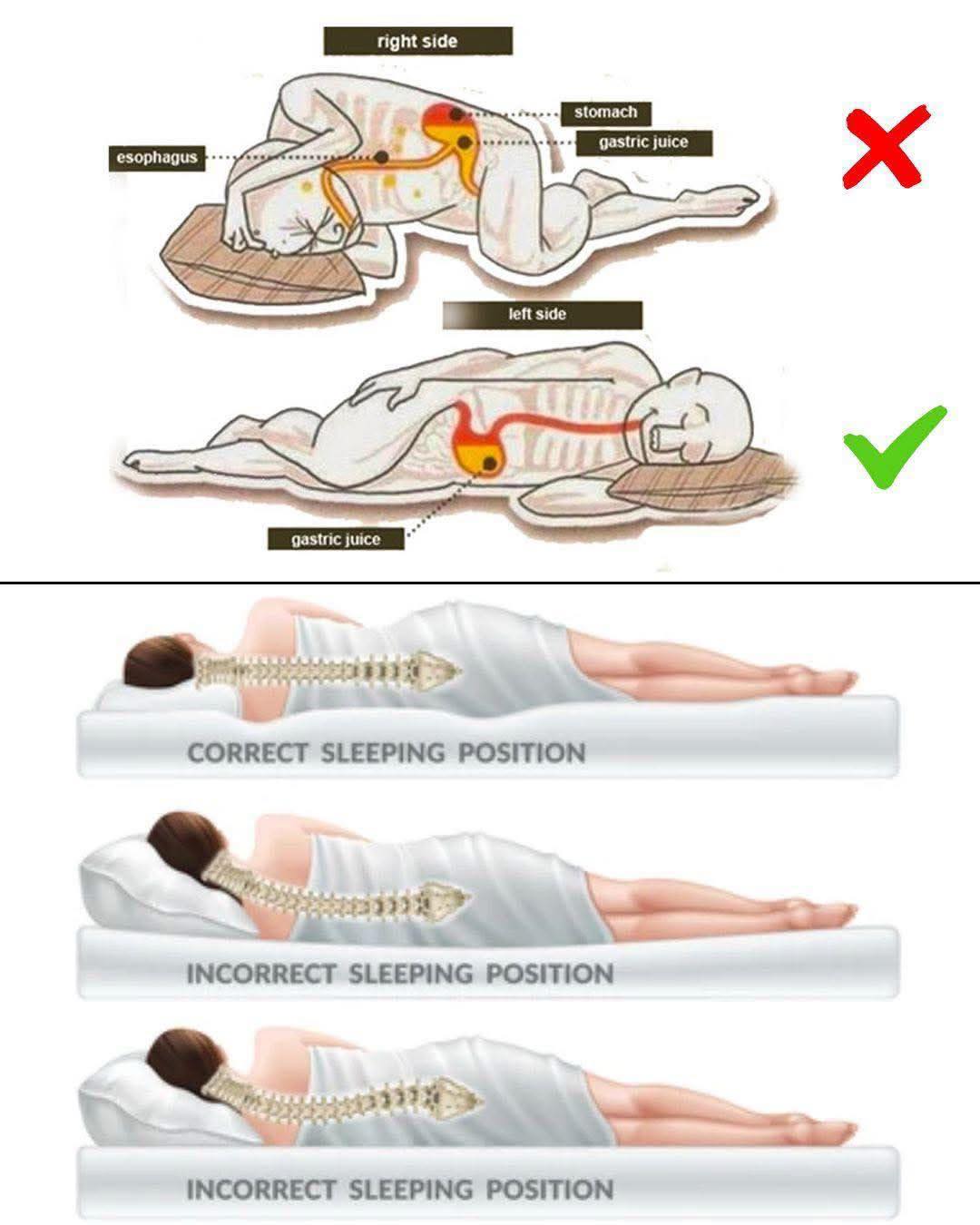
Your body doesn’t “switch off” during sleep. It continues to:
- Regulate breathing
- Support digestion
- Maintain spinal alignment
- Circulate blood and lymphatic fluids
- Cleanse the brain of metabolic waste
Poor sleep posture can:
- Reduce oxygen intake
- Strain the neck and lower back
- Increase pressure on joints
- Worsen acid reflux
- Disrupt deep, restorative sleep cycles
Over time, this may contribute to chronic pain, fatigue, digestive problems, or sleep disorders like apnea.
Warning Signs Your Sleep Position May Be Hurting You
If you regularly experience:
- Loud snoring
- Morning headaches
- Acid reflux or heartburn
- Neck or shoulder stiffness
- Waking up tired despite 7–8 hours of sleep
Your sleeping position might be playing a bigger role than you realize.
Sleeping on Your Left Side: The Healthiest Default?
For many adults, left-side sleeping offers significant benefits backed by anatomy and physiology.
1. Supports Better Digestion
The stomach and pancreas are positioned slightly toward the left side of the body. Lying on the left helps gravity assist digestion and may reduce acid reflux symptoms.
2. Improves Circulation and Lymphatic Drainage
The lymphatic system—which removes toxins and waste—drains more efficiently when you lie on your left side. This may support better detoxification overnight.
3. Helps Brain Waste Removal
During deep sleep, the brain activates its cleansing system (called the glymphatic system), which removes waste proteins. Side sleeping appears to support this process more effectively than back sleeping.
4. Ideal During Pregnancy
Doctors often recommend left-side sleeping during pregnancy because it improves blood flow to the placenta and reduces pressure on major blood vessels.
Bottom line: If you’re unsure which position to choose, the left side is generally a safe and healthy starting point.
Other Sleeping Positions: Pros and Cons
Sleeping on Your Back
Back sleeping can help maintain spinal alignment if your pillow and mattress provide proper support.
However, it may:
- Worsen snoring
- Increase risk of sleep apnea
- Reduce oxygen flow
- Cause morning headaches