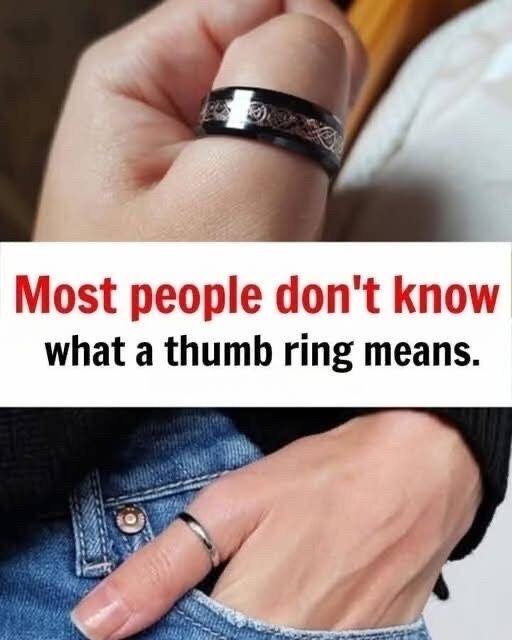
Beyond gendered interpretations, the thumb ring functions as a broader symbol of nonconformity and self-definition, precisely because it lacks a fixed cultural narrative. Unlike engagement rings, wedding bands, or class rings, it is not tied to a specific milestone or institution. Its meaning is shaped almost entirely by the wearer’s intention and experience. This freedom is a large part of its appeal. Some people adopt thumb rings during periods of reinvention, when they are shedding old identities or stepping into new ones. Others use them as a form of creative expression, selecting designs that reflect personal aesthetics, beliefs, or emotional states. Because the thumb is so visible and active, the ring becomes part of everyday communication. It catches the light during gestures, appears in moments of emphasis, and subtly integrates into how a person interacts with the world. As a result, the ring often reads as deliberate, reinforcing the impression of decisiveness and presence. Even when the wearer is not consciously making a statement, the choice tends to be interpreted as intentional. This interpretive openness allows the thumb ring to serve as a flexible symbol, one that can hold different meanings at different times. It may represent confidence one year, creativity the next, and quiet resistance to conformity at another point in life. Its adaptability mirrors the evolving nature of identity itself.
Most people don\’t know what a thumb ring means,