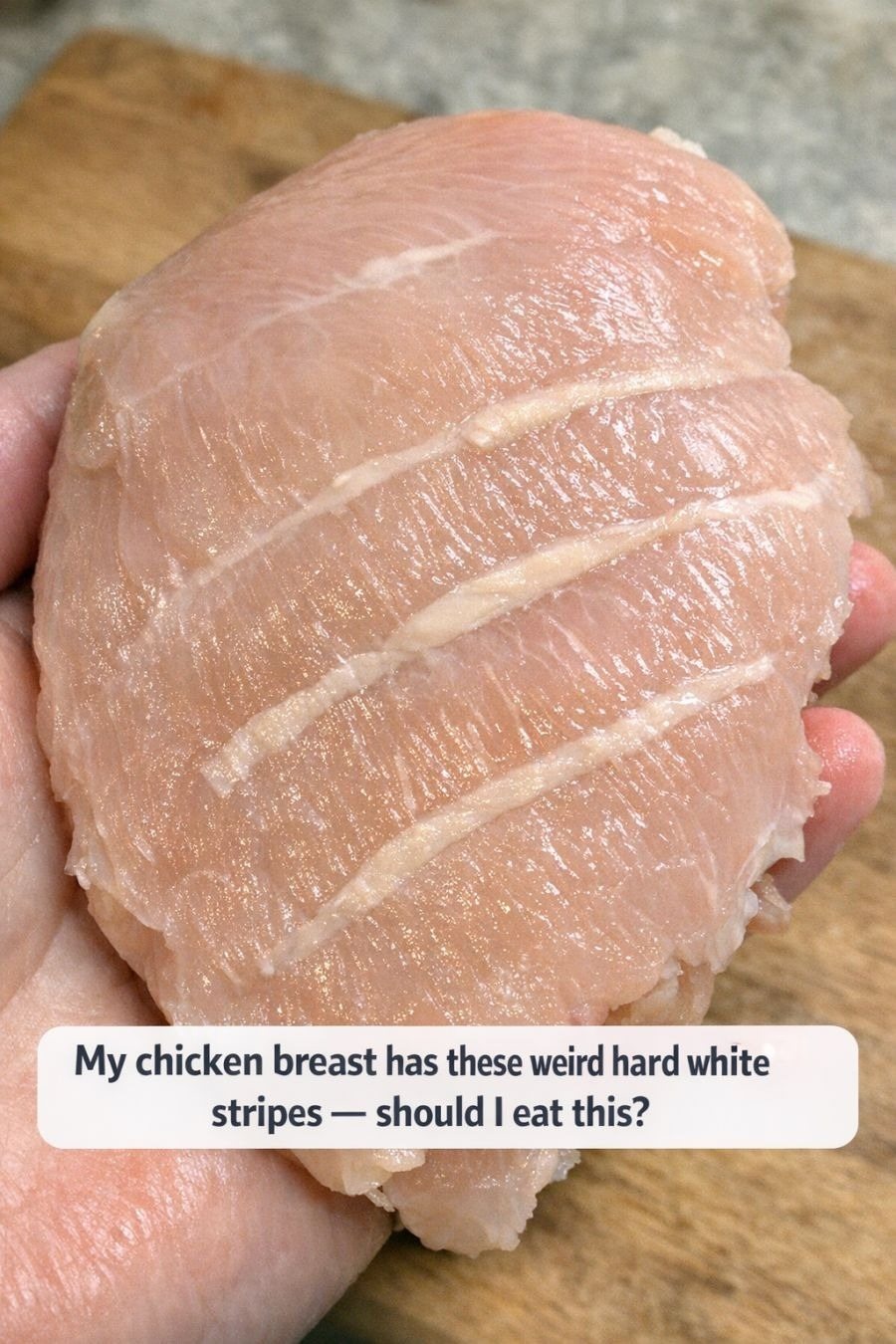
4. How White Striping Changes Taste, Texture, and Nutrition
White striping changes the texture of the chicken breast, making it tougher and less tender. The increased fat content can also alter the taste, making it less desirable for some consumers.
From a nutritional standpoint, white striping increases the fat content of chicken, thereby reducing the protein-to-fat ratio. While chicken is generally considered a lean protein, those with white striping have higher saturated fat levels, potentially affecting dietary choices for those monitoring fat intake.
5. When Weird Chicken Texture Is a Red Flag for Spoilage
While white striping itself is not an indicator of spoilage, it is important to be aware of other signs that chicken may be going bad. These include a foul odor, slimy texture, and discoloration.
Always check the expiration date and storage conditions of the chicken. If there is any doubt about its freshness, it is safer to discard the chicken to prevent the risk of foodborne illness.
6. How to Spot White Striping at the Grocery Store
To spot white striping at the grocery store, look closely at the chicken breast for white or pale lines running parallel to the muscle fibers. These stripes are usually more prominent in larger cuts of chicken.
If you are concerned about white striping, consider purchasing chicken from brands that emphasize slower growth practices or opt for organic or free-range options, which are less likely to exhibit these characteristics.
7. Cooking Tricks to Make Woody or Striped Chicken More Palatable
Marinating chicken with white striping can help tenderize the meat and improve its flavor. Use an acidic marinade with ingredients like lemon juice or vinegar to break down the muscle fibers.
Slow cooking methods, such as braising or using a slow cooker, can also help make the chicken more tender. Additionally, slicing the chicken thinly or pounding it to an even thickness can improve its texture.