4. Sudden Bruise or Hematoma
Did she bump her foot yesterday without realizing how hard?
Children sometimes injure themselves and forget to mention it.
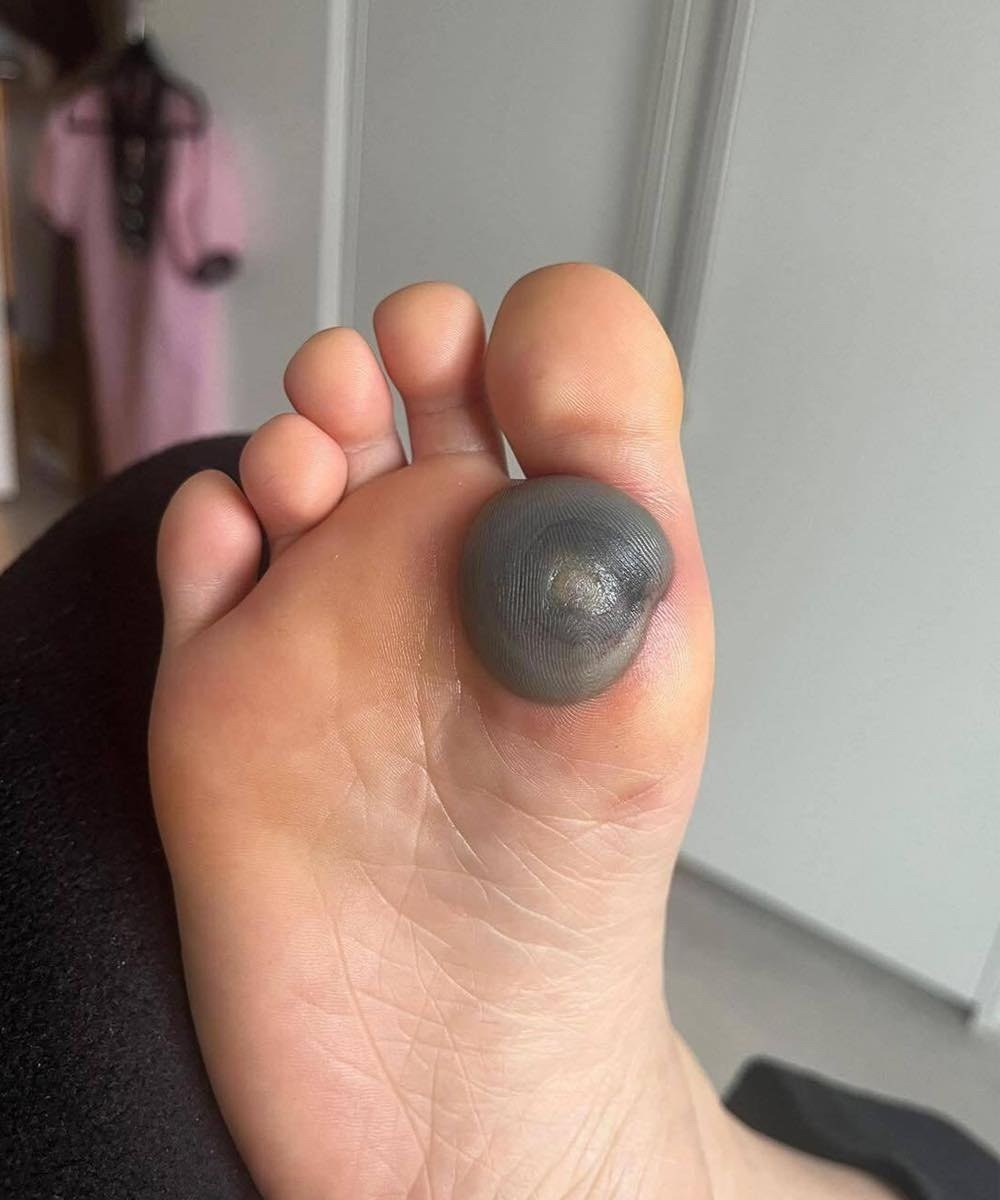
A hematoma (a pooled collection of blood under the skin) can look like:
- A large dark purple or blue spot
- Swelling
- Pain when pressing or moving
If the discoloration is deep purple and appeared suddenly, this could be bleeding under the skin from trauma.
However — if there was no injury and the spot is large and painful, it’s worth getting checked.
5. Allergic Reaction
Some allergic reactions can cause:
- Swelling
- Redness
- Pain or itching
- Rapid appearance overnight
However, allergic reactions usually cause itching more than severe pain.
If there’s:
- Lip or facial swelling
- Trouble breathing
- Hives spreading elsewhere
That’s an emergency.
6. Joint Infection (Septic Arthritis)
This is less common — but serious.
If the spot is near the ankle or toe joint and your daughter:
- Refuses to move the joint
- Cries when it’s touched
- Has fever
- Cannot bear weight at all
Doctors consider joint infection.
This requires immediate evaluation.
Children with septic arthritis often:
- Hold the foot completely still
- Avoid all movement
- Have extreme tenderness
If this sounds like her, go to the ER immediately.
7. Hand-Foot-Mouth Disease (If Other Spots Appear)
If she also has:
- Small blisters on hands
- Mouth sores
- Fever
It could be viral (like hand-foot-mouth disease).
However, those spots are usually multiple small blisters — not one large painful area.
8. Blood Clot (Rare in Children)
Blood clots in the foot are very rare in children unless there are underlying conditions.
Symptoms would include:
- Swelling
- Pain
- Warmth
- Possibly color change
If swelling is severe and one foot looks dramatically different from the other, medical evaluation is necessary.
Questions to Ask Yourself Right Now
To narrow this down, consider:
- Is the area warm?
- Is it spreading?
- Is there a puncture mark?
- Does she have a fever?
- Did she injure it yesterday?
- Is the pain getting worse?
- Is she refusing to put weight on it?
These answers help determine urgency.
When You Should Seek Immediate Medical Care
Go to urgent care or ER if:
- She cannot walk at all
- Pain is severe
- The redness is spreading
- The skin is hot
- She has fever
- The spot is dark purple/black
- She seems unusually tired or sick
Children’s infections can spread quickly — earlier treatment is always better.
What You Can Do Right Now (If Symptoms Are Mild)
If:
- There’s no fever
- Pain is moderate
- The spot is not spreading
- She can move it a little
You can:
- Elevate the foot
- Apply a cool compress (not ice directly on skin)
- Give age-appropriate pain relief (like acetaminophen or ibuprofen, if safe for her)
- Mark the edges of redness with a pen to see if it spreads
- Monitor closely for 12–24 hours
If it worsens at any point — get help.