The Short Answer: Spoilage, Not Fermentation
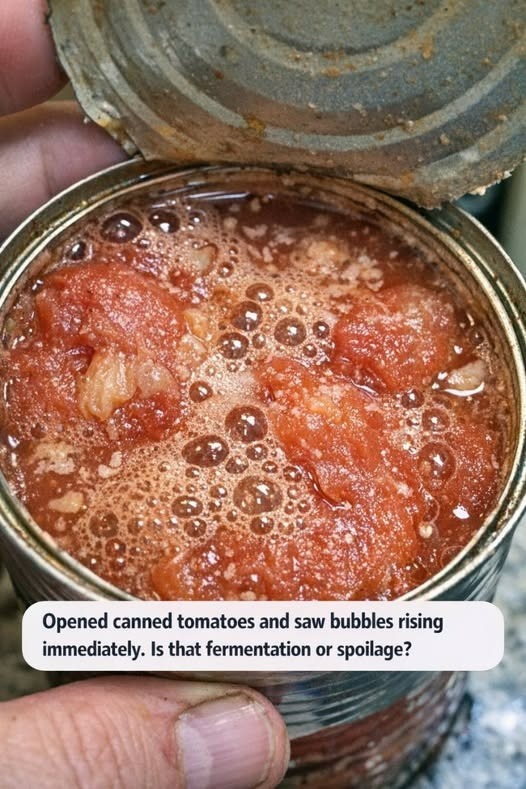
In a commercially sealed can, immediate bubbling upon opening is almost always a red flag for spoilage, not safe, intentional fermentation.
Here’s the crucial difference:
- Intentional Fermentation (like in sauerkraut, kimchi, or some artisanal canned goods) is a controlled process. The product is designed to have live, beneficial bacteria, and it’s packaged in a way that allows for gas release (like a jar with a fermentation lid). You wouldn’t find this in a standard, shelf-stable metal can of tomatoes.
- Spoilage is an uncontrolled, microbial free-for-all. Harmful bacteria (like Clostridium botulinum, which causes botulism) or yeasts that survived or contaminated the can after processing begin to break down the food, producing gas as a waste product. This gas builds up pressure inside the sealed can.
The Science Behind the Bubbles: A Can’s Last Gasp
Commercially canned foods are processed under extreme heat and pressure to create a sterile environment, then sealed to keep everything out. A perfect can is a tomb—nothing in, nothing out.
When you see those immediate bubbles, you’re witnessing the release of gas (often carbon dioxide or hydrogen sulfide) that has built up inside the can before you opened it. This is a cardinal sign of microbial activity where there should be none. The organisms responsible could be:
- Thermophilic (heat-loving) bacteria that survived the canning process.
- Yeasts or molds that entered through a microscopic breach in the can’s seal.
- In worst-case scenarios, spore-forming pathogens that were not fully eliminated.