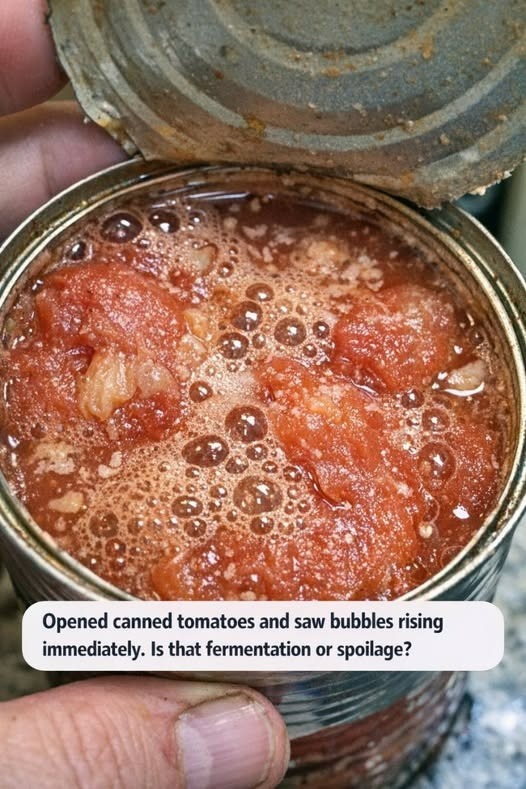
Sometimes, spoilage announces itself loudly. Before you even use your can opener, check for these warning signs:
- The Bulging Lid: The most dangerous sign. If the ends of the can are swollen, convex, or bowing out, pressure has built up inside. Do not open. Discard immediately.
- Leaking or Seepage: Any sign of liquid around the seams or lid.
- Rust or Deep Dents: Especially along the seams, which can compromise the seal.
- A Loud “Hiss” or Spray: Upon opening, a forceful release of gas is a bad sign.
The “When In Doubt” Rule: A Cook’s Best Policy
Food safety experts and home canning pros all agree on one unwavering principle: When in doubt, throw it out.
The risk is not worth the reward of a $2.50 can of tomatoes. Consuming spoiled, low-acid canned goods (like tomatoes, which are borderline low-acid) can lead to serious foodborne illness.
What to do right now:
- Do not taste it. Botulism toxin is odorless and flavorless; you cannot detect it by smell or taste.
- Do not use it in your recipe. Even cooking at high temperatures may not destroy all toxins produced by certain bacteria.
- Dispose of it safely. If possible, place the entire, unopened (or re-closed) can in a sealed plastic bag and dispose of it in the trash where pets and wildlife can’t get to it.
- Clean up. Wash the opener, your hands, and any surfaces the liquid may have touched with hot, soapy water.