📍 Where They’re Commonly Found
You’ll usually see mantis egg cases:
- On fence posts
- On shrub branches
- In tall grasses
- On garden stakes
- Under eaves or on walls
The female chooses a location that offers protection but still gives her offspring quick access to insects when they hatch.
❗ Should You Remove It?
In most cases: No. Leave it alone.
Here’s why:
- It’s not dangerous
- It won’t damage your fence
- It won’t spread or grow
- It provides natural pest control
- Removing it destroys hundreds of beneficial insects
Unless you absolutely need to move it (for example, if it’s on a frequently handled surface), it’s best to let nature take its course.
🌱 Why This Is Actually a Good Sign
Finding a mantis egg case means:
- Your yard supports insect biodiversity
- There’s a natural food chain in place
- You likely use fewer harsh chemicals
It’s a small but powerful indicator of a balanced backyard ecosystem.
When to Be Cautious
While mantis egg cases are harmless, make sure it’s not:
- A mud dauber nest (made of hardened mud tubes)
- A wasp nest (papery and layered)
- A fungal growth (softer and irregular)
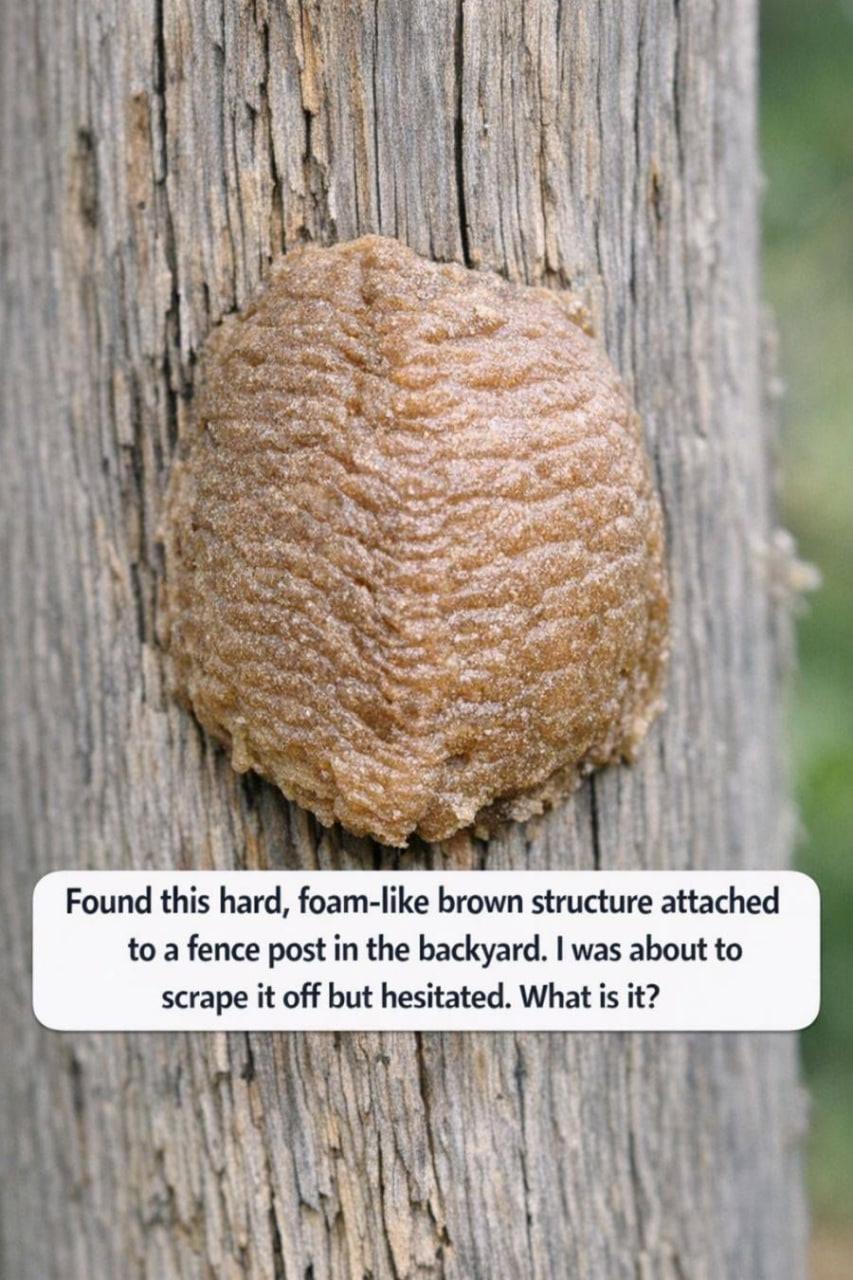
If it’s hard, ridged, foam-like, and glued in place—it’s almost certainly a mantis ootheca.
Bottom Line
That odd brown foam blob isn’t something harmful—it’s a winter nursery for one of your garden’s best natural allies.