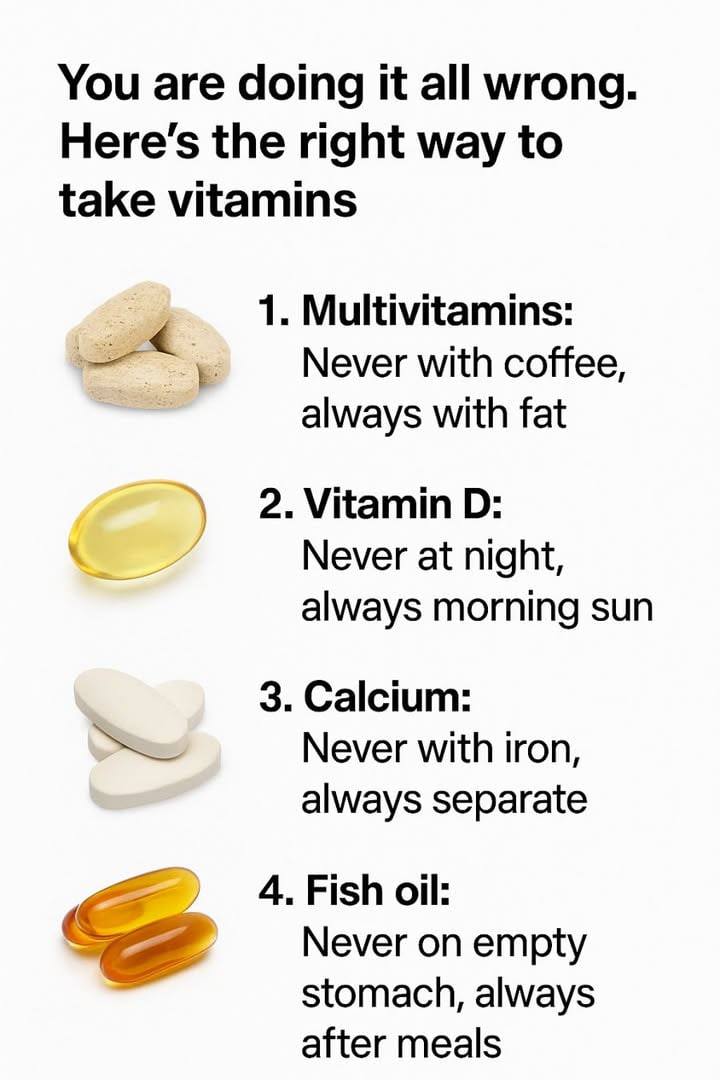
5. Fish Oil: Take After Meals
Omega-3s in fish oil are better absorbed with meals containing healthy fats. Taking fish oil after a meal also reduces gastrointestinal discomfort and the fishy aftertaste.
6. Water-Soluble vs. Fat-Soluble Vitamins
- Water-soluble (B-complex, C): Take with water or on an empty stomach.
- Fat-soluble (A, D, E, K): Take with meals containing dietary fats.
7. Food Pairings Enhance Absorption
Certain foods improve vitamin uptake:
- Vitamin C-rich foods (oranges, strawberries) help absorb plant-based iron.
- Vitamin K-rich foods (kale) pair well with healthy fats.
8. Avoid Overdose
Exceeding Recommended Daily Allowances (RDA) can be harmful, especially with fat-soluble vitamins. Consult a healthcare provider before increasing dosages.
9. Lifestyle Impacts Vitamin Efficacy
Diet, alcohol, smoking, stress, and sleep affect vitamin absorption. Healthy lifestyle choices enhance the effectiveness of your supplements.
10. Myths and Misconceptions
Vitamins are supplements, not cures. Natural is not always better than synthetic. Rely on scientific evidence to guide usage.
11. Consult a Healthcare Professional
Individual needs vary by age, gender, health, and lifestyle. Professionals can recommend blood tests, determine deficiencies, and suggest appropriate supplements and dosages.