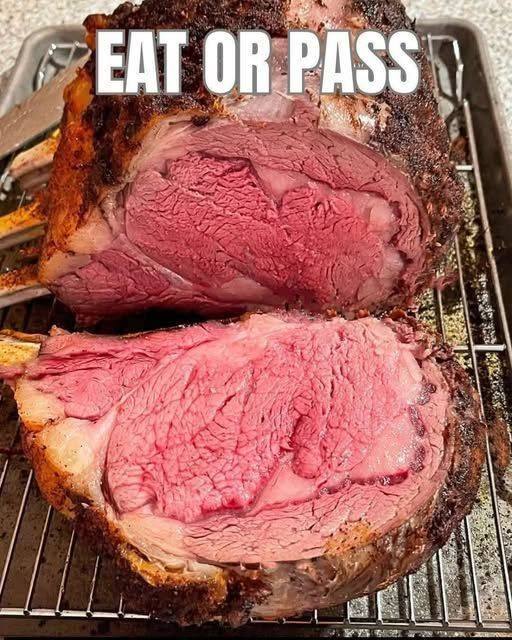
- Place the roast on a cutting board with a lip to catch juices.
- Using a sharp carving knife, slice perpendicular to the bones for even servings.
- Cut into ¾–1 inch thick slices depending on guest preference.
- Serve immediately with au jus, horseradish cream, or a side of roasted vegetables.
Presentation Tip: Arrange slices in a fan shape on a platter for visual appeal.
Step 9: Optional Holiday Sides
- Garlic Mashed Potatoes: Boil potatoes, mash with roasted garlic, butter, cream, and salt.
- Honey-Glazed Carrots: Roast carrot sticks with honey, olive oil, and thyme until tender and caramelized.
- Brussels Sprouts: Pan-sear with pancetta or bacon, season with salt, pepper, and a squeeze of lemon.
- Yorkshire Pudding: Bake batter in hot oil until puffed and golden; perfect for soaking au jus.
Tip: Colorful sides make the Christmas plate visually stunning and flavorful.
Step 10: Tips for Perfect Prime Rib
- Use a thermometer: Avoid guessing; precision ensures perfect doneness.
- Dry-brine in advance: Salt overnight for depth of flavor.
- High-to-low roasting: Initial high heat ensures crust, low heat finishes cooking evenly.
- Resting is crucial: Never skip; juices redistribute and meat firms up.
- Season generously: Herbs, garlic, and pepper complement the rich beef flavor.
Step 11: Variations and Enhancements
- Herb-Crusted Prime Rib: Mix fresh herbs, garlic, mustard, and breadcrumbs for a fragrant crust.
- Spicy Prime Rib: Add smoked paprika, cayenne, or chili flakes to the rub for warmth.
- Coffee-Rubbed Prime Rib: Ground coffee enhances the natural umami and gives a subtle earthy flavor.
- Butter-Basted Prime Rib: Use a pan of melted butter during cooking to continuously baste for extra richness.
- Smoked Prime Rib: For outdoor cooking, smoke the roast for 3–4 hours at low temperature for an intense smoky flavor.
Step 12: Serving and Presentation
- Serve on a large holiday platter garnished with rosemary sprigs and cranberries.
- Arrange side dishes around roast slices for a festive buffet-style spread.
- Pour au jus into a small sauce boat for easy self-service.
- Include condiments like horseradish cream, mustard, or cranberry sauce for variety.
Tip: Color and garnish elevate the plate from everyday meal to holiday feast centerpiece.
Step 13: Storage and Leftovers
- Refrigerate slices in airtight containers for up to 3–4 days.
- Reheat gently in the oven or sous-vide to avoid drying out.
- Use leftover roast for sandwiches, salads, or stews.
- Freeze thinly sliced portions for up to 2 months.
Tip: Leftover au jus can be reduced into a concentrated sauce for enhanced flavor.
Step 14: Troubleshooting Common Issues
- Overcooked Roast: Reduce oven temperature next time and use thermometer.
- Underseasoned Meat: Increase rub or dry-brine time.
- Dry Meat: Slice thinner, or ensure proper resting before carving.
- Burned Crust: Tent foil after high-heat sear to prevent over-browning.
Step 15: Nutritional Estimate (Per Serving)
- Calories: ~650–750 (depending on roast size and sides)
- Protein: 50–60 g
- Fat: 45–50 g
- Carbohydrates: 10–15 g (without sides)
- Sodium: Moderate depending on seasoning
Note: Prime rib is rich and indulgent—perfect for holiday celebrations.