Pruning during dormancy is one of the most crucial tasks for the future harvest. At this stage, the main objective is to balance growth with production.
Proper pruning allows:
- Thin out the canopy to allow light to reach all branches
- Reduce diseases and pests associated with damp and dark areas
- Remove old, broken, or weak branches
- Remove unproductive vertical shoots
- Directing energy towards fruit-bearing buds
An open and well-lit canopy produces larger, better colored, and healthier fruit.
In addition, pruning helps to avoid alternate bearing (one year a lot of fruit and the next almost none) and prolongs the productive life of the tree.
4. Whitewash the trunk to protect it from the weather and pests
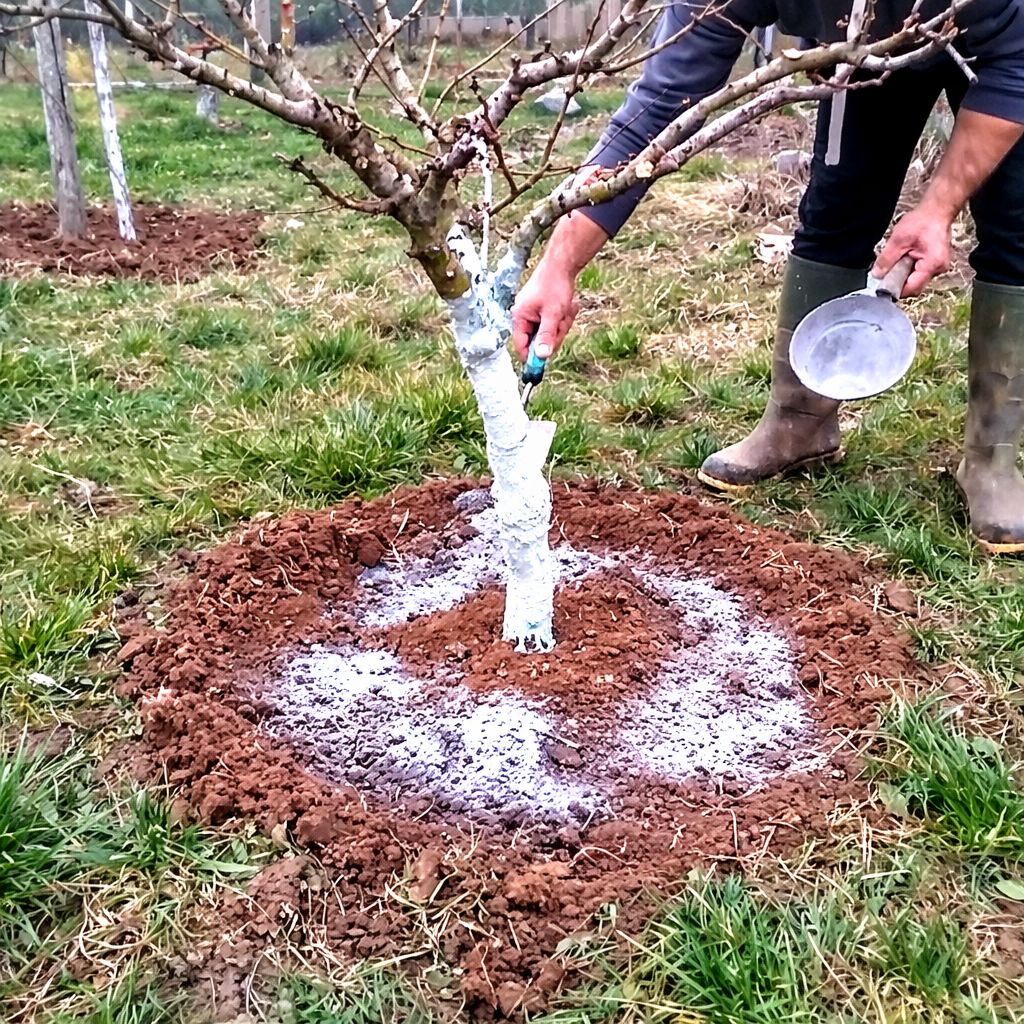
Painting the trunk with a lime mixture isn’t just for aesthetics. It provides vital protection during the unpredictable days of spring.
The white color reflects solar radiation and prevents the trunk from overheating during the day. Without this protection, the sap can be activated prematurely, and if a nighttime frost then occurs, the bark can crack.
Money laundering too:
- Disinfect the bark
- Removes moss and lichen
- Destroys insect eggs hidden in cracks
- It can delay the start of growth by a few days, helping to avoid late frosts.
It should be applied when the temperature exceeds 5 °C.
Simple recipe for homemade mix
- 1 kg of hydrated lime
- 50 g of common salt
- 25 g of powdered sulfur
- 1 liter of water
Mix until you get a homogeneous paste and apply to the trunk.
5. Carry out the preventive winter spraying (copper treatment)
Preventative spraying before sprouting is one of the most effective measures to keep the orchard healthy.
Copper-based products act as a barrier against dangerous fungi and bacteria, preventing early infections that are then very difficult to control.
This treatment helps prevent diseases such as:
- leaf rolling
- rottenness
- early fungal infections
Mineral oils are often added to the preparation. These oils coat insect eggs and larvae with a thin film that suffocates them, reducing the pest population before spring.
The key is to completely wet the tree: from the thinnest branches to the base of the trunk.
Apply when the temperature exceeds 5°C.
Practical tips and recommendations
- Do not work the soil too deeply so as not to damage surface roots.
- Always disinfect your tools before pruning to avoid infection.
- Avoid pruning on days with severe frost.
- If the tree is young, prioritize forming the structure over seeking production.
- Perform the spraying on days without wind or rain.
- Observe each tree individually: not all need the same intensity of pruning or fertilization.
The difference between an ordinary harvest and an extraordinary one is decided long before flowering. With proper soil preparation, adequate nutrition, correct pruning, trunk protection, and preventative treatment, the trees concentrate their energy on producing healthy and abundant fruit. Acting in time is the true key to success in any orchard.