When should you consult a dermatologist?
Most white spots are benign, but consult a doctor if you observe:
- Spots that grow rapidly or change shape.
- A symmetrical and progressive loss of pigment (suspected vitiligo).
- Lesions with significant scaling, marked itching or redness.
- A sudden appearance after 50 years.
- Associated symptoms (hair loss, intense fatigue, thyroid disorders — vitiligo is sometimes linked to other autoimmune diseases).
- Spots on the genitals, mucous membranes or around the eyes/mouth.
What to do in the meantime?
- Use a broad spectrum SPF 50+ sunscreen on the affected areas (the sun accentuates the contrast).
- Keep the skin well hydrated (creams containing ceramides or urea).
- Avoid scratching or exposing the skin to irritants.
- Do not use harsh home remedies (pure lemon, vinegar), which can worsen the irritation.
In summary
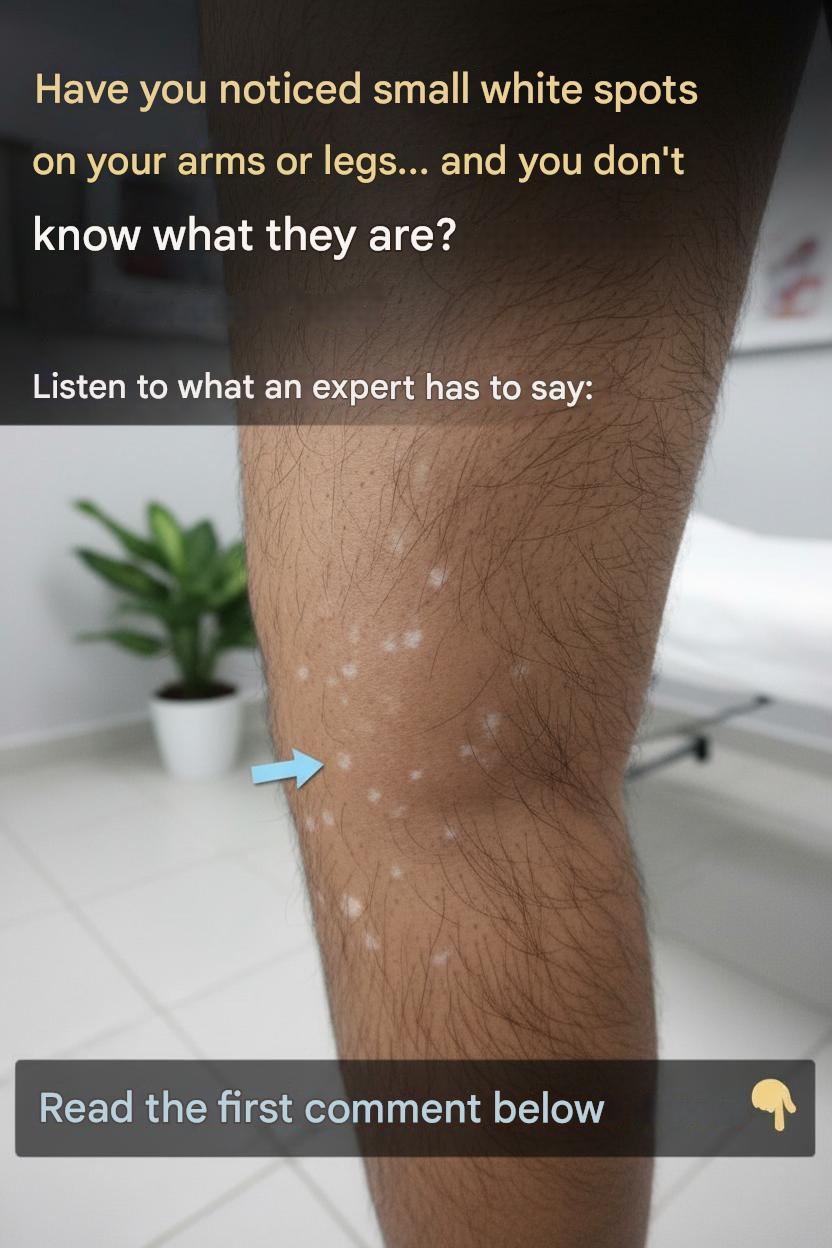
White spots are most often benign (age-related solar hypomelanosis, fungal pityriasis versicolor, dryness-related pityriasis alba), but vitiligo and certain autoimmune diseases require accurate diagnosis.
A dermatologist can usually identify the cause easily (sometimes with the help of a Wood’s lamp or a biopsy) and offer appropriate treatment (creams, antifungals, phototherapy, etc.).
Are the spots small and scattered on the arms/legs, or larger on the face/hands?
Is there any itching or peeling? Feel free to provide more details to help guide our investigation.